
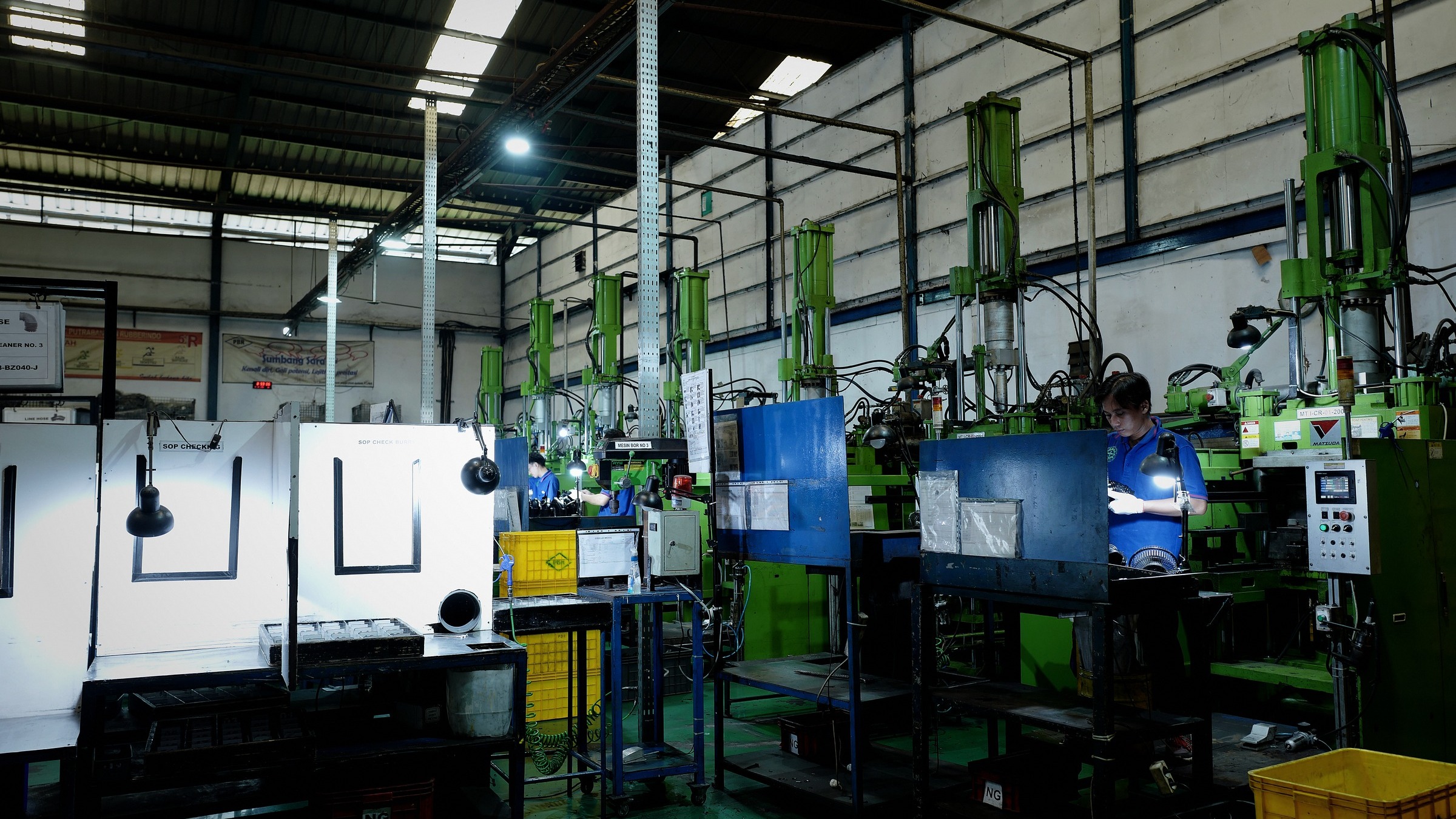
Cold Runner, Compression, Hot Runner, Vacuum — 65+ Molding Machines Under One Roof
Cold runner injection leads our production floor, inside a much larger capability. We match the molding method to the part — not to a marketing line.
What We Run Today — All Counts Verified
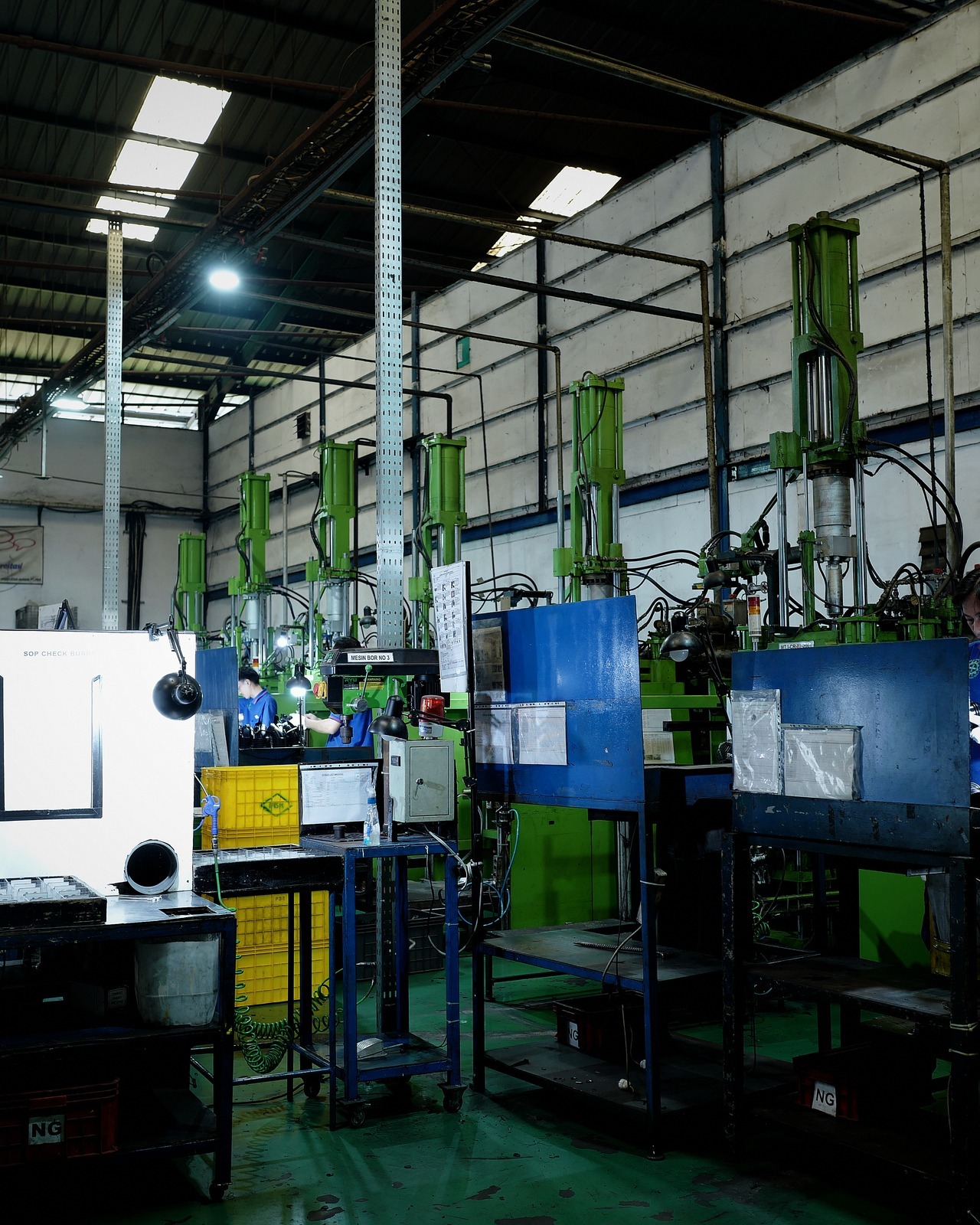
How Cold Runner Injection Works
A cold runner injection press has two thermal zones:
- Cold runner block (~80–100 °C): rubber compound stays below cure temperature, so it remains pourable and reusable on the next injection.
- Hot mold cavity (~160–190 °C): only the rubber inside the cavity reaches cure temperature and forms the finished part.
When the press opens, the cured part ejects. The uncured rubber sitting in the cold runners stays put and feeds the next cycle — no sprue scrap, no replaced runner material.
Why OEM Buyers Choose Cold Runner Over Compression Molding
| Factor | Compression Molding | Cold Runner Injection |
|---|---|---|
| Material waste | Significant — sprues and flash are scrap | Minimal — runners are reused |
| Cycle consistency | Operator-dependent | Press-controlled, repeatable |
| Surface finish | Visible flash, manual deflash needed | Cleaner finish, less trimming |
| Cure uniformity | Depends on operator pre-form | Press meters precise shot volume |
| Best suited to | Low volumes, very simple parts | Medium-to-high volume OEM runs |
That said, compression molding still wins on certain part geometries — and we run 46 compression machines for exactly that reason. The molding method gets matched to the part, not to a marketing line.
Primarily In-House Mold Manufacturing — Why It Matters
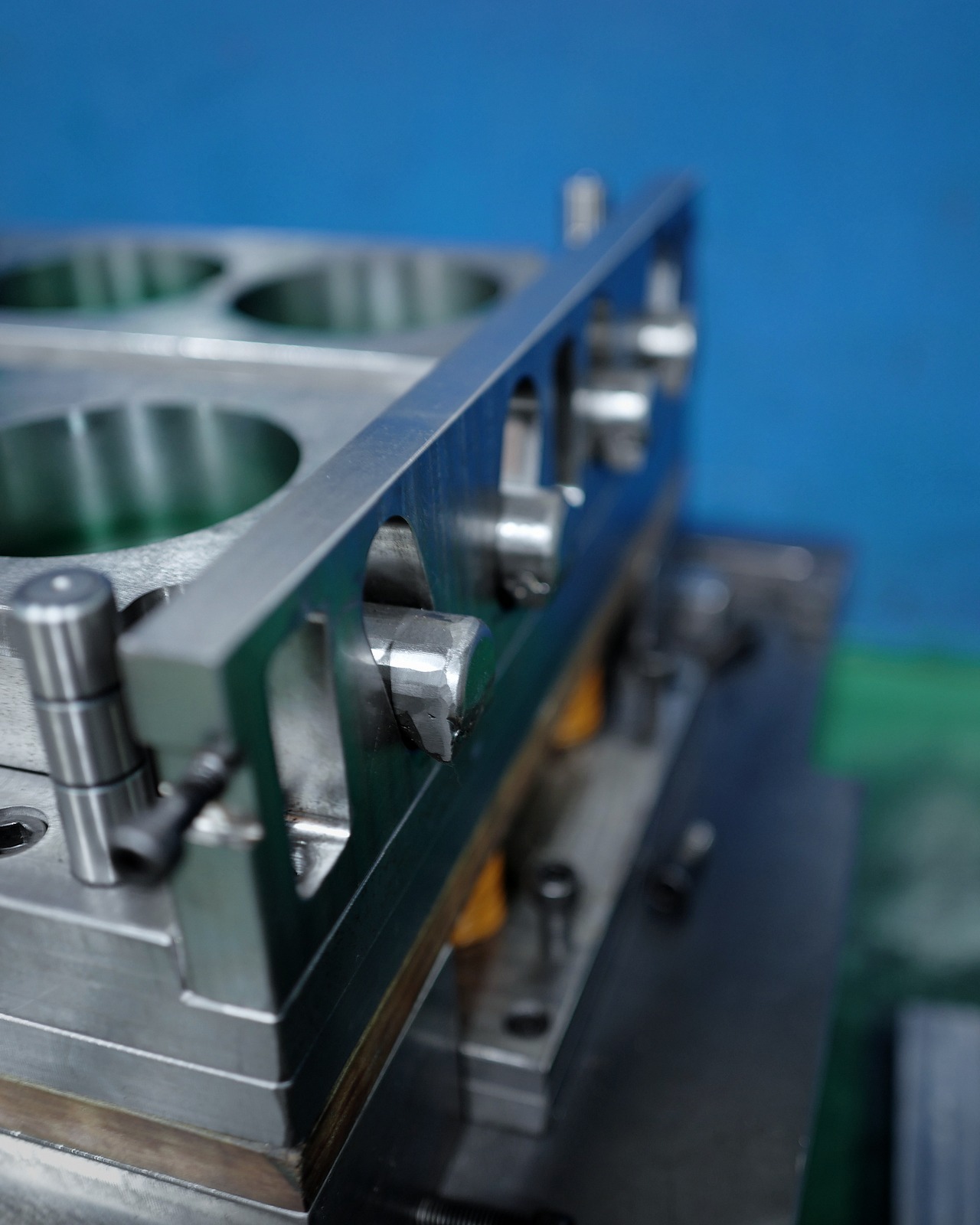
For most programs we design and cut our own molds on in-house CNC mold milling, and prototype with an FDM 3D printer for early-stage fit checks. For extremely difficult or highly specialized parts — exotic geometries, unusual cavity counts, specialty steels — we partner with a small set of vetted external tool makers we've worked with for years. That hybrid model gives every program the right route to tooling:
- Shorter tooling lead time for the majority of parts (in-house path)
- Direct iteration between the engineer cutting the mold and the operator running the press
- Tighter cost control on multi-cavity tooling
- IP discipline — in-house tooling stays inside our walls; vetted external partners operate under confidentiality on the complex jobs
- The right specialist hands on extremely difficult tooling, not a "make it work" compromise
From Raw Polymer to Packed Part
Compounding
Automatic chemical weighing, kneader or open roll mill mixing, two-roll finishing.
Batch testing
Mooney viscometer for processability, rheometer for cure curve, hardness on sample slab.
Molding
Cold runner injection, compression, hot runner, or vacuum — matched to the part geometry.
Finishing & QC
Deflash, post-cure (silicone/FKM), dimensional and adhesion inspection.
Pack & ship
Traceable batch labels, certificate of conformance, shipping per agreed Incoterm.