Cold runner injection is the rubber-molding process where the runner channels (the system that carries uncured rubber from the press nozzle into the mold cavities) are held below the rubber's cure temperature. The rubber inside the runners stays uncured between shots, so it is reused on the next injection cycle. The result: significantly less material waste, cleaner parts with less flash, and more uniform cures than compression molding or hot-runner methods.
How it works
A cold runner injection press operates two thermal zones simultaneously.
- The cold runner block, kept in the 80–100 °C range, holds the rubber in a pourable, uncured state. Nothing in the runner system reaches cure temperature.
- The mold cavity, held in the 160–190 °C cure range, is the only place where the rubber actually crosslinks and forms the finished part.
When the press opens, the cured part is ejected from the cavity. The uncured rubber sitting in the cold runner stays in place and feeds the next cycle. No sprue scrap, no replaced runner material.
Why OEM buyers care
For a high-volume rubber program (engine mountings, suspension bushings, oil seals shipped by the thousand) the compound is often the single biggest line-item cost. Cold runner systems typically reduce rubber waste by 15 to 30 percent versus compression molding on the same part. Multiplied across an annual program, that is real money.
Three other things matter for OEM-grade work:
- Cycle consistency. Cold runner presses meter shot volume by machine, not by operator-loaded preform. Across a long production run, the dimensional and weight variance is tighter.
- Surface finish. Less sprue trimming, less flash to deflash. Finishing labour drops.
- Cure uniformity. Because the cavity sees a precisely metered shot every time, the cure curve runs through the same profile every cycle.
When compression molding still wins
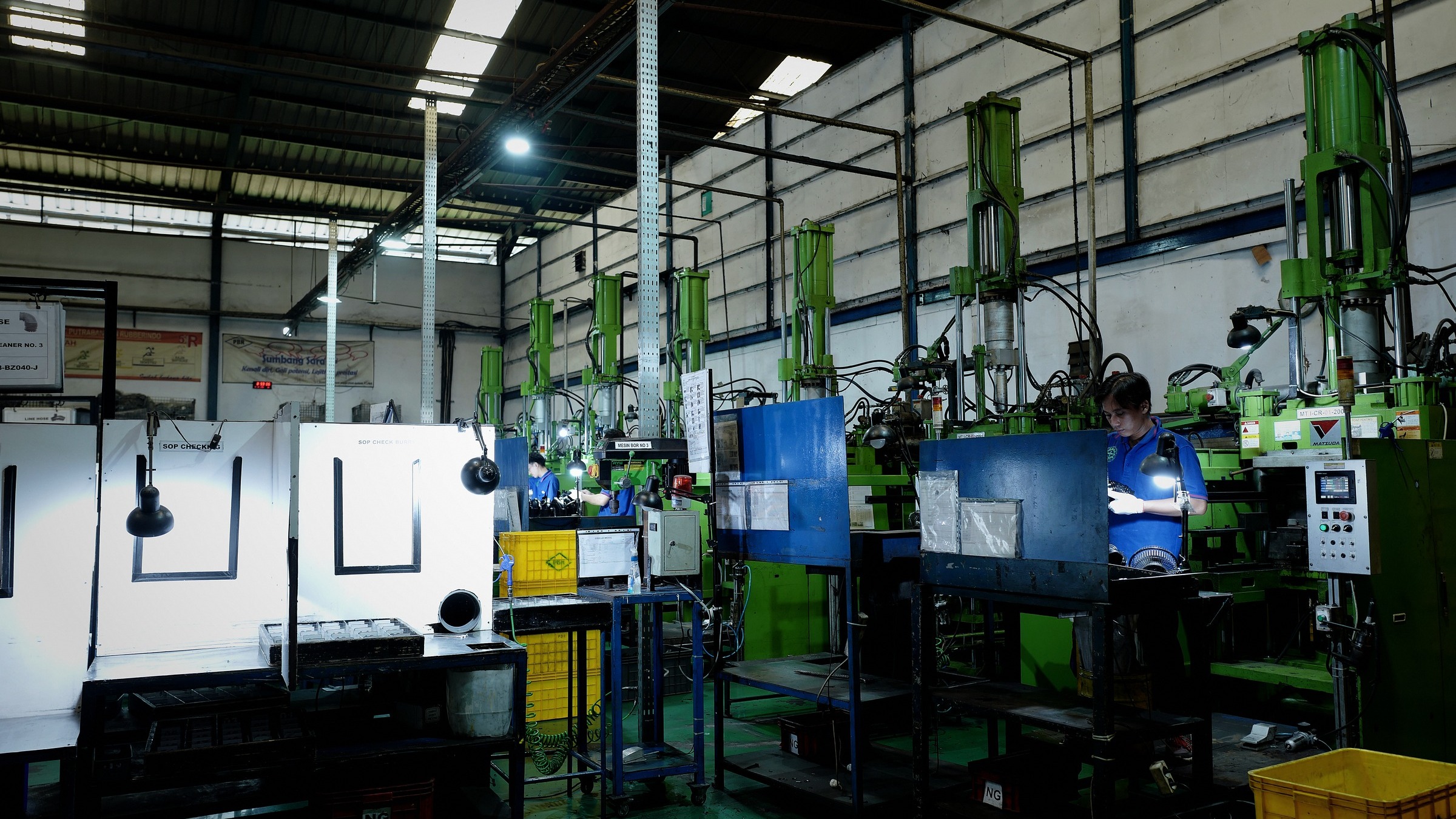
Cold runner is not the answer for every part. For very low-volume programs, single-cavity tooling, or parts with complex geometry that doesn't lend itself to a runner-and-gate system, compression molding remains the better choice. At our Cikupa factory we run 9 cold runner injection presses alongside 46 compression machines for exactly that reason. The molding method gets matched to the part, not to a marketing line.
What it looks like at PBR
PT Putrabangun Rubberindo runs cold runner injection as the lead technology on the production floor at our 10,000 sqm SGS-certified Cikupa facility. Compounds are mixed in-house on 2 open roll mills, a 55-litre kneader, and a 75-litre kneader, with automatic chemical weighing. Every batch is rheometer-tested for cure curve before it reaches a press. Read the equipment census on our cold runner capability page.
Send your drawing or sample to marketingoem@pbrubberindo.co.id. We respond within one business day, EN/ID/JA (日本語対応).