Sourcing rubber parts in Indonesia gives buyers a competitive cost base, a deep Japanese-OEM supplier ecosystem, and a manufacturing culture that has been quietly serving the regional automotive supply chain for decades. But the manufacturer base is uneven. This is a practical checklist for evaluating an Indonesian OEM rubber parts supplier before you sign a quote.
1. Heritage and continuity
How long has the manufacturer been continuously operating? A supplier that started in the last 5 years is still learning the workflow on your program. A supplier with 20+ years has been through commodity cycles, currency cycles, and OEM model transitions — and the compounding, bonding, and QC knowledge accumulated over that time is the actual asset you're buying. PB Rubber Indo has run continuously since 2003 from a single Tangerang operation.
2. Named customers — verified, not stock photos
Ask for the customer roster. A real OEM supplier can name customers (subject to disclosure policy). PBR's verified roster from the 2023 company profile includes Hino, Suzuki, Honda, ROKI Co. Ltd, APM, GSS, BMT, TACI, and PT. Enomoto Srikandi Industries, plus high-voltage power infrastructure customers. If a supplier can only describe "major automotive OEM customers" without naming any, that's a signal.
3. Quality certification — and the certifying body
ISO 9001:2015 should be the minimum. Equally important is who issued the certificate. SGS, TÜV, Bureau Veritas, DNV, and Lloyd's Register are globally recognised. PB Rubber Indo is certified by SGS continuously since 2009.
4. Vertical integration
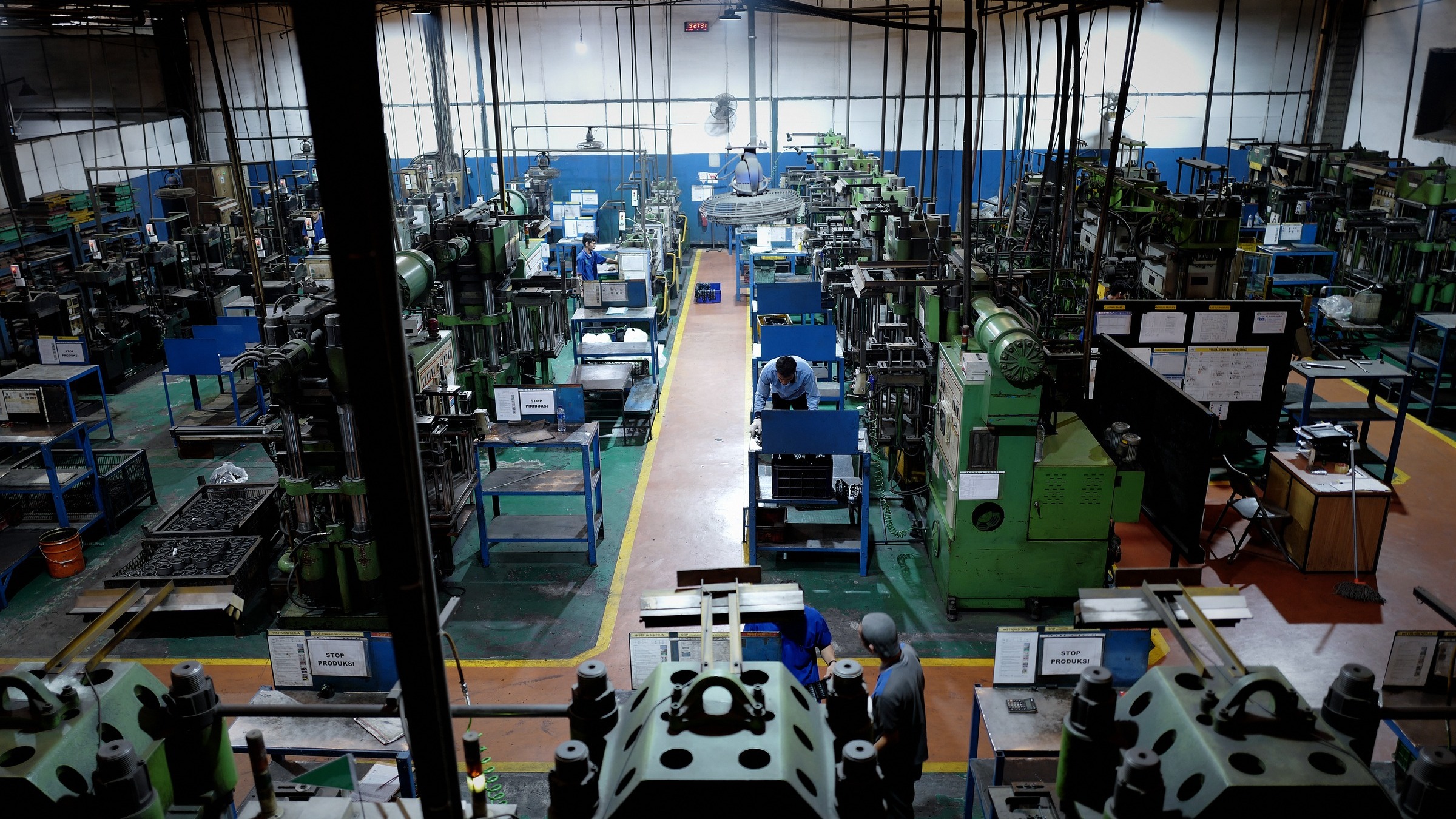
The strongest Indonesian rubber manufacturers control the full process under one roof: compounding, mold making, molding, finishing, QC. Outsourcing any of these steps adds lead time, dilutes traceability, and exposes your IP to additional vendors. PBR runs compounding in-house (on 55-litre and 75-litre kneaders), mold manufacturing in-house (CNC milling plus FDM 3D printer), and all molding methods (9 cold runner, 46 compression, 4 hot runner, 3 vacuum) on the same Cikupa floor.
5. Customer-specific test capability
Suppliers running deep OEM programs build customer-specific test rigs over time. The presence of tailor-made test machines on the QC bench (PBR has these) signals long-standing PPAP-level programs — not generic spec-sheet manufacturing.
6. Trilingual operation
For Japanese OEM programs operating in Indonesia, English alone is not enough. A supplier that operates EN and JA in drawings, technical correspondence, and quality reports (日本語対応) drastically reduces communication friction. PBR has been bilingual since the founding.
7. Award track record
Supplier awards from major OEM principals aren't given for marketing. PBR was named Best Supplier 2009 by PT. Hino Motors Sales Indonesia (signed by Toshiro Mizutani, President Director). Recognition like that means a Japanese-OEM-grade procurement team has audited the supplier and decided they outperformed the field on quality, delivery, and program execution.
The shortlist
Evaluating PBR or any other Indonesian supplier? Email marketingoem@pbrubberindo.co.id with your program details. We respond within one business day, EN or JA. See our customer roster, awards, and 22-year heritage.